
Quick Answer
Subterranean termites are the far bigger threat to New York City homes. They are established and active throughout the five boroughs, Long Island, and Westchester, living in the soil and building mud tubes to reach the wood in your home. Drywood termites are not established in New York at all. On the rare occasion they show up here, it is almost always because they arrived inside a piece of furniture, crate, or antique shipped from a warmer state. If you are dealing with a termite problem in NYC, subterranean termites are almost certainly what you have.
Introduction
You hear “termites” and you probably picture one generic wood-eating bug. In reality, there are different species with very different habits, and knowing which one you are up against changes everything about how the problem gets treated.
The two types homeowners ask about most are subterranean termites and drywood termites. Both eat wood. Both cause real damage. But only one of them is actually a threat to homes in New York City, and understanding why matters if you want to spend your money on the right treatment instead of the wrong one.
Where Each Termite Species Actually Lives
Subterranean Termites: Built Around New York’s Climate
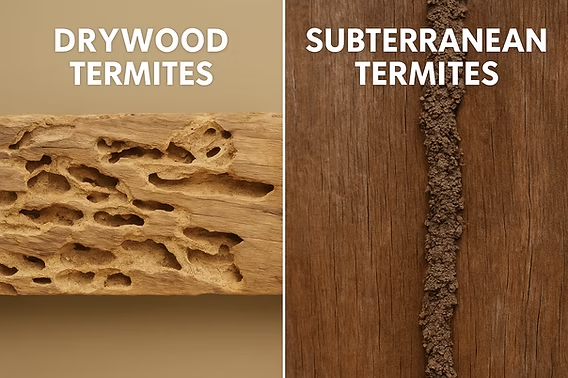
Subterranean termites live in the soil. They need constant contact with moisture to survive, which is why they build the pencil-width mud tubes you may have seen running along a foundation wall. Those tubes are not decoration. They are protected tunnels that let the termites travel between their underground colony and the wood they are feeding on, keeping them from drying out along the way.
This species is built for exactly the conditions found across NYC and Long Island: soil that retains moisture, older foundations, basements, and a huge inventory of wood-frame and wood-trimmed homes. A mature subterranean colony can hold hundreds of thousands of workers, all feeding around the clock, every day of the year.
Drywood Termites: A Southern Species That Doesn’t Survive Here
Drywood termites work differently. They do not need soil contact at all. They live directly inside dry wood, above ground, and get the small amount of moisture they need from the wood itself.
That independence from soil moisture sounds like it should make them adaptable anywhere, but it is actually what keeps them out of New York. Drywood termites are a warm-climate species, established along the Gulf Coast, the southern Atlantic states, the Southwest, and coastal California. They are not equipped to survive a New York winter, and there is no established, self-sustaining drywood termite population anywhere in the state.
When drywood termites are found in New York, it is almost always because they hitched a ride in something wooden, most commonly antique furniture, wooden crates, or picture frames, brought up from a region where they are native. A small, isolated colony can survive for a while inside that one piece of furniture, but it is not the same as a home being under attack from an established local population the way it would be in Florida or Georgia.
How Each Species Damages Wood
Subterranean Termite Damage
Subterranean termites eat along the grain of the wood, targeting the softer springwood layers and leaving the harder summerwood behind. This creates a honeycomb pattern of damage hidden inside the wood, with soil packed into the tunnels. From the outside, infested wood often looks completely normal until you tap it and hear a hollow sound, because the interior has already been consumed.
Drywood Termite Damage
Drywood termites tunnel across the wood grain rather than along it, and they leave behind small, hard, pellet-shaped droppings that look almost like grains of sand or fine pepper. Because their colonies are much smaller than subterranean colonies, typically a few thousand members compared to hundreds of thousands, the damage they cause develops far more slowly.
Subterranean vs. Drywood Termites: Quick Comparison
| Subterranean Termites | Drywood Termites | |
|---|---|---|
| Established in New York | Yes | No |
| Needs soil contact | Yes | No |
| Colony size | Hundreds of thousands | A few thousand |
| Damage pattern | Along the grain, honeycomb, packed with soil | Across the grain, hollow chambers |
| Droppings | None visible (soil-packed tunnels) | Hard, pellet-shaped, pushed out of the wood |
| Mud tubes | Yes | Never |
| How it typically arrives in NYC | Native, lives in local soil | Transported in furniture or wood objects |
| Overall threat level to NYC homes | High | Low, and rare |
Signs You’re Dealing With Subterranean Termites
- Mud tubes running along your foundation, basement walls, or floor joists
- Wood that sounds hollow when tapped, even though the surface looks intact
- Winged swarmers with two pairs of equal-length wings, usually seen in spring after warm, rainy weather
- Discarded wings near windowsills or doors after a swarm
Signs You’re Dealing With Drywood Termites
- Small, hard, pellet-like droppings collecting under a specific piece of furniture or in a drawer
- Tiny holes in wood furniture, especially antiques or items brought from another region
- Damage isolated to one object rather than spreading through the structure
If what you are seeing is confined to a single piece of furniture and there is no soil contact involved, drywood termites transported from elsewhere are a real possibility. If you are seeing mud tubes or damage spreading through structural wood, you are dealing with the local, established threat: subterranean termites.
Why This Distinction Actually Matters
Treating the wrong termite species means wasting money and giving the real problem more time to spread.
Subterranean termite control requires addressing the colony in the soil, typically through a liquid termiticide barrier around the foundation or a bait station system placed around the property. Spot-treating a single piece of wood does nothing, because the colony that is feeding your home lives underground and will keep sending workers back.
A localized drywood termite issue, on the other hand, may only require treating or replacing the specific infested item, since there is no soil-based colony driving the problem. Applying a foundation-wide termiticide treatment for what turns out to be one infested antique dresser is unnecessary and expensive.
This is exactly why correct identification matters before any treatment plan is decided on, and why a professional inspection is worth the call before you assume you know what you are dealing with.
How Pestonix Handles Termite Control in NYC and Long Island
Pestonix is an employee-owned pest control company serving New York City, Long Island, and Westchester County. Our technicians hold NYSDEC Commercial Certified Pesticide Applicator certification, including the category covering termite and beetle control specifically.
Because subterranean termites are the species actually established here, our Structural Insect Control program is built around treating the source of a subterranean infestation, not just the visible symptoms. That means a full inspection of the foundation, basement, and crawlspace, followed by a treatment plan matched to what we actually find on your property. Residential customers are backed by our 3-Month No-Pest Guarantee, which includes free follow-up visits if activity returns during that window.
If you have a piece of furniture you suspect might be carrying drywood termites, especially something recently acquired from out of state, we can inspect it and advise you on whether it needs treatment or should simply be discarded before it becomes a bigger issue.
Frequently Asked Questions
Do drywood termites exist in New York City?
No, not as an established population. New York’s climate does not support a self-sustaining drywood termite colony. The rare cases found in the state involve termites transported inside furniture or wood objects from a warmer region.
If I see termite damage in my NYC home, is it more likely subterranean or drywood?
Almost certainly subterranean. Subterranean termites are native to the region and are the species responsible for the overwhelming majority of termite damage in NYC and Long Island homes.
Can drywood termites spread from a piece of furniture into the rest of my house?
It is uncommon, but not impossible over a long period of time if the infested wood stays in place. The bigger risk is usually the item itself continuing to deteriorate. A professional inspection can tell you whether the colony is contained or moving.
How do I know if it’s carpenter ants instead of termites?
Carpenter ants have a pinched waist, bent antennae, and push out coarse, sawdust-like debris. Termites have a straight body, straight antennae, and either soil-packed tunnels (subterranean) or hard pellet droppings (drywood). If you are unsure, a professional inspection settles it quickly.
What should I do if I just bought antique furniture and I’m worried about termites?
Inspect it for small round pellets, tiny exit holes, or a papery sound when tapped before bringing it fully into your home. If you see any of these signs, have it inspected before it sits near other wood furniture or structural elements.
Does homeowner’s insurance cover termite damage in NYC?
Termite damage is typically excluded from standard homeowner’s insurance policies, which is part of why prevention and early detection matter more than repair after the fact.
Get a Termite Inspection in NYC or Long Island
If you are seeing mud tubes, hollow-sounding wood, or discarded wings around your home, do not wait to find out which termite species you are dealing with. Given how rare drywood termites actually are here, the smart assumption is subterranean, and the smart move is a professional inspection before the damage spreads further.
Call Pestonix at 917-913-6062 for New York City or 631-560-2166 for Long Island, or visit pestonix.com to request a free inspection. Our Structural Insect Control and Ant Control Services programs are designed specifically for the wood-destroying pests common to NYC and Long Island’s older building stock.
Pestonix serves Brooklyn, Queens, Manhattan, the Bronx, Long Island, Nassau County, Suffolk County, Melville, and Westchester, NY.
Pestonix 143 Old Country Road, Melville, NY 11747 Phone: 1-917-913-6062 Email: