

German cockroaches are small (about ½ to ⅝ inch), light brown with two dark stripes behind the head, and live indoors, usually in kitchens and bathrooms. American cockroaches are large (1½ to 2 inches), reddish brown with a yellowish edge behind the head, and prefer damp basements, drains and sewers. The German cockroach breeds far faster, which is why it is the one that tends to take over apartments.
NYC Health lists these two as the most common cockroaches in city homes. American cockroaches are typically found in moist basements and lower floors, while German cockroaches can turn up anywhere inside a home. Knowing which one you have tells you where it came from and how to get rid of it.
German vs American Cockroach at a Glance
| Feature | German cockroach | American cockroach |
|---|---|---|
| Adult size | About ½ to ⅝ inch | About 1½ to 2 inches |
| Color and markings | Light brown, two dark stripes behind the head | Reddish brown, yellowish margin behind the head |
| Flight | Has wings but does not fly | Rarely flies, but can in hot, humid weather |
| Where found | Kitchens, bathrooms, behind appliances and cabinets | Basements, boiler rooms, heating ducts, drains, sewers |
| Where it comes from | Lives only with people and spreads through them, not from outdoors | Often enters from sewers, drains and basements |
| Eggs per egg case | 30 to 40 | 14 to 16 |
| Egg case handling | Female carries it until just before hatching | Female glues or deposits it in a crack |
| Egg cases per lifetime | 4 to 8 | About 10 |
| Time to complete a life cycle | About 100 days | About 210 days to over two years |
| Generations per year | 3 to 4, up to 6 | Fewer, because development is slow |
Sources: UF/IFAS, Rutgers NJAES, Virginia Tech, Oklahoma State University Extension and NYC Health.
How to Identify a German Cockroach
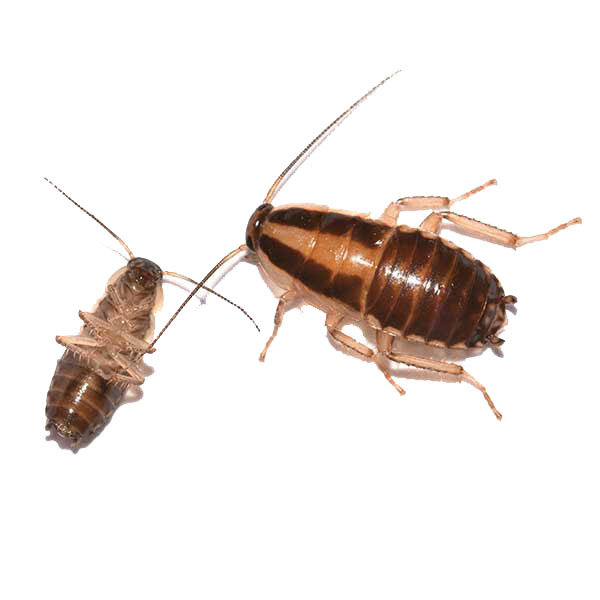
- Size and color: About ½ to ⅝ inch long, light brown, with two dark, lengthwise stripes on the shield behind the head. Young German cockroaches are wingless and nearly black, with a single light stripe down the back.
- Where you find them: Kitchens and bathrooms, especially behind baseboards, in cracks around cabinets and pantries, and under stoves, refrigerators and dishwashers.
- Signs: Dark specks like ground pepper or coffee grounds, small tan egg cases, a musty odor and smear marks along baseboards.
- What daytime sightings mean: Virginia Tech notes that clusters seen in daylight point to a large population.
How to Identify an American Cockroach
- Size and color: One of the largest common house roaches. Adults are 1½ to 2 inches long, reddish brown, with a yellow margin around the shield behind the head and wings that cover the abdomen.
- Where you find them: Basements, crawl spaces, boiler rooms, heating ducts, pipe chases, floor drains and near sewer lines.
- Movement: They run fast when disturbed. Adults can fly short distances in hot, humid conditions.
- Eggs: Dark brown, purse-shaped capsules about ⅜ inch long.
New Yorkers often call big roaches “water bugs.” They are usually American cockroaches, not a true aquatic insect.
Other roaches you might see
Oriental cockroaches (cherry to black, about 1 to 1.25 inches) also live in damp areas like basements and drains. Brown-banded cockroaches are about the size of German cockroaches, so look closely before assuming. If you are not sure, a technician can identify the species during an inspection.
Why German Cockroaches Take Over an Apartment So Fast
The speed difference is the key fact for NYC apartments:
- Each German cockroach egg case holds 30 to 40 nymphs. UF/IFAS notes that even one pregnant female is a reason for treatment.
- A female produces 4 to 8 egg cases in her lifetime, and the full life cycle takes about 100 days.
- German cockroaches produce 3 to 4 generations a year, and as many as 6 under ideal conditions.
- A growing population is mostly young. Rutgers reports that about 80 percent of an active German cockroach population is nymphs, so the adults you see are only part of the picture.
American cockroaches take much longer to develop and lay fewer eggs per case. Virginia Tech notes that their large size and slow development mean large infestations are not common inside houses.
German cockroaches also resist insecticides. Rutgers notes this ability is one reason they are the most common cockroach in the country, which is why store-bought sprays often fail.
Where Each Cockroach Comes From in NYC
German cockroaches do not enter from outdoors. UF/IFAS says they spread entirely through people and live only in association with them. In NYC, they arrive in grocery bags, cardboard boxes and used appliances, and they travel between units through shared walls, pipes and vents. A spotless apartment can still get them from a neighbor.
American cockroaches come from damp structural areas: basements, boiler rooms, steam and heating tunnels, drains and sewer lines. Penn State notes that in northern cities they are often tied to steam heat tunnels. If you are seeing large roaches on a lower floor, a moisture or plumbing problem is the likely cause.
Health Risks
Both species contaminate surfaces and food. The most serious documented risk is asthma. NYC Health says cockroach saliva, droppings and body parts are allergens that can trigger asthma, especially in children. Our guide on whether cockroaches are dangerous covers the health risks in more detail.
NYC Health also warns against using foggers, bombs or illegal pesticides such as Tres Pasitos, Chinese roach chalk or Tempo. These can land in places where people cook, eat and play.
How Treatment Differs
| German cockroach | American cockroach | |
|---|---|---|
| Main fix | Professional gel baiting, crack-and-crevice treatment and insect growth regulators that interrupt breeding | Fix moisture and plumbing issues, seal entry points, treat cracks where activity is found |
| Why DIY fails | Resistance, hidden egg cases, and spread through shared walls | Entry from sewers and basements continues if the source is not fixed |
| Building role | Often needs building-wide coordination | Often tied to basement, pipe and sewer conditions |
What you can do now:
- Store food, including pet food, in sealed containers.
- Fix leaks and dry sinks and drains at night.
- Clean grease and crumbs behind the stove and refrigerator.
- Seal gaps around pipes and baseboards.
- Do not use foggers or bombs.
UF/IFAS also notes that gravid German females feed less while carrying eggs, which makes bait alone harder, and why follow-up treatment matters.
Who Is Responsible in an NYC Rental?
Under Local Law 55 of 2018, owners of NYC buildings with three or more apartments must keep tenants’ apartments free of pests, including cockroaches. If you rent, document the problem with photos and dates, and make written requests. Our guide on landlord vs tenant pest control in NYC explains the process.
When to Call a Professional
Call a licensed technician if you:
- See roaches in daylight or in groups
- Find egg cases, droppings or a musty smell
- Keep seeing roaches after DIY sprays or baits
- Suspect roaches are coming from neighboring units, the basement or shared plumbing
Cockroach Control With Pestonix
Pestonix’s cockroach control uses gel baiting, targeted crack-and-crevice application and insect growth regulators that interrupt the breeding cycle. Licensed technicians inspect kitchens, bathrooms and utility rooms for the hiding spots that store-bought sprays miss. Treatments are family-safe and pet-safe, and same-day service is available for active infestations. The work falls under our structural insect control service.
We serve Manhattan, Brooklyn, Queens, the Bronx, Staten Island and Long Island, and we work with both tenants and landlords.
Not sure which roach you have? Request a free quote or contact us for an inspection. Call 917-913-6062.
Frequently Asked Questions
What is the difference between German and American cockroaches?
German cockroaches are small, light brown and striped, and live indoors in kitchens and bathrooms. American cockroaches are large and reddish brown, and prefer damp basements, drains and sewers. German cockroaches breed much faster.
Which cockroach is more common in NYC apartments?
NYC Health lists both as the most common. German cockroaches are found anywhere inside homes, while American cockroaches are mainly in moist basements and lower floors.
Can American cockroaches fly?
Adults have wings and rarely fly, but they can in hot, humid weather. German cockroaches have wings but do not fly.
Do German cockroaches come from outside?
No. UF/IFAS says they live only with people and spread through human activity, such as boxes, bags and shared walls.
Why do I keep seeing roaches after spraying?
German cockroaches can resist insecticides, and sprays often miss hidden egg cases and wall voids. Professional baiting and follow-up usually work better.