
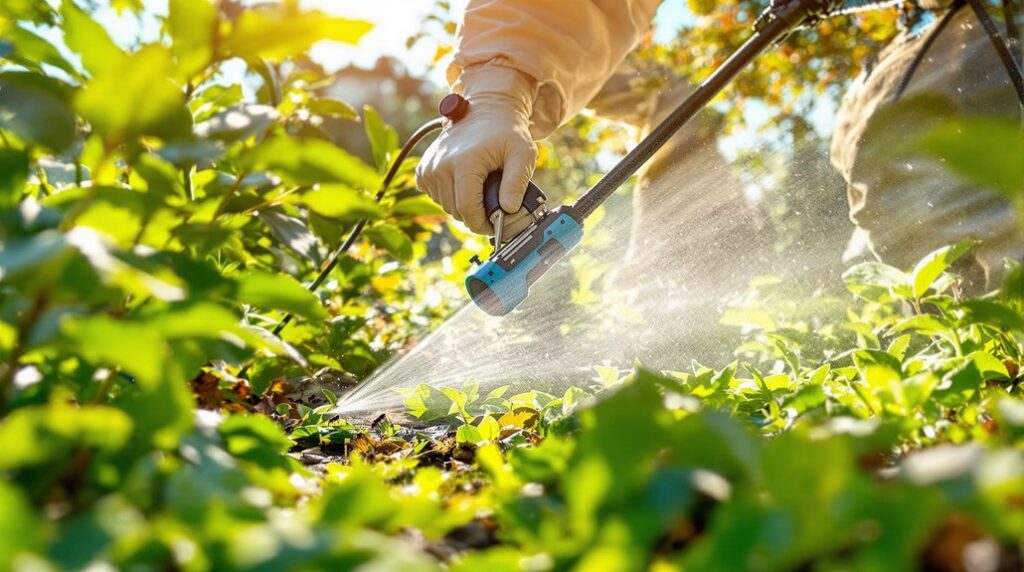
You step outside on a summer morning, coffee in hand, ready to enjoy your yard, and instead you find a dozen ant hills scattered across your lawn. Sound familiar? If you’re a homeowner in Manhattan, Brooklyn, Queens, the Bronx, Nassau County, Melville, or anywhere across New York City, ant infestations in lawns are one of the most frustrating and persistent pest problems you’ll face. Knowing how to control ants in lawn areas isn’t just about aesthetics. Ant colonies damage grass roots, create unsightly mounds, and can quickly spread from your yard into your home. Left untreated, a small ant problem becomes a full-scale infestation that no amount of DIY ant killer can solve. This guide covers everything you need to know, e.g. How to Control Ants in Lawn and identifying ant species to professional-grade ant control solutions, so you can reclaim your lawn for good.
Why Ants Invade Your Lawn in the First Place
Before learning how to control ants in lawn environments, it helps to understand why they’re there. Ants don’t randomly choose your yard, they’re attracted to specific conditions that make your lawn the perfect home.
According to research published by the University of Florida’s Institute of Food and Agricultural Sciences, ants prefer lawns that offer:
- Loose, well-drained soil, ideal for tunnelling and colony construction
- Consistent moisture from irrigation or rainfall
- Food sources, aphids, plant sap, seeds, and organic debris
- Undisturbed areas, lawns with low foot traffic
- Warm soil temperatures, which accelerate colony growth
In cities like Nassau County and Melville, suburban lawns with garden beds, mulch, and irrigation systems create a near-perfect ant habitat. In Brooklyn and Queens, older properties with cracked sidewalks and established landscaping give ants easy access from the yard to the foundation to the interior.
Understanding these attractants is the first step toward effective, long-lasting ant control.
The Real Damage Ants Do to Your Lawn
Many homeowners underestimate how destructive ants actually are to lawn health. This isn’t just a cosmetic problem.
Root Damage Ant tunnelling disrupts grass root systems. As colonies excavate soil beneath your turf, they loosen the earth around grass roots, causing patches to dry out and die. A study from the University of Exeter found that ant activity in lawns significantly alters soil structure, affecting plant growth and grass health.
Soil Displacement Ant hills push fine soil to the surface, smothering surrounding grass and creating uneven terrain. In heavily infested lawns, the surface becomes lumpy and difficult to mow, a common complaint from homeowners across Nassau County and the Bronx.
Aphid Farming Many ant species actively protect and “farm” aphids on nearby plants. Aphids damage your garden plants while ants harvest their honeydew secretions. This symbiotic relationship, documented by Cornell University’s Department of Entomology, means an ant problem in your lawn often signals a broader garden pest problem.
Pathway Into Your Home Lawn, ant colonies that go untreated eventually find their way inside. This is especially problematic in Manhattan and Brooklyn brownstones, where foundation cracks and landscaping planted close to buildings give ants a direct route indoors.
Identifying the Ant Species in Your Lawn
Effective ant control starts with correct identification. Different species require different treatment approaches, and using the wrong method wastes time and money.
Pavement Ants
The most common ant species in New York City lawns. Small, dark brown, and typically found nesting under sidewalks, driveways, and along foundations. They invade lawns in search of food and can establish large colonies quickly.
Carpenter Ants
Larger black ants prefer moist or decaying wood. Common in Brooklyn and Bronx properties with older trees, wood mulch, or wooden fencing. They don’t eat wood but excavate it for nesting, causing structural damage over time.
Fire Ants
Increasingly common in Queens and Nassau County as temperatures warm. Fire ants are aggressive, deliver painful stings, and create large mounds that disrupt lawn surfaces. They’re particularly dangerous for children and pets.
Odorous House Ants
Named for the coconut-like odour they release when crushed. Common in Melville and suburban Nassau County lawns. They nest in shallow soil and rapidly invade homes when lawn colonies grow large.
Thatch Ants
Build large mounds using grass thatch and plant material. Found throughout New York City parks and suburban lawns in Queens and the Bronx. Their mounds can reach several inches in height and significantly damage turf.
How to Control Ants in Lawn: Methods That Actually Work
Now for the core question: how to control ants in lawn areas effectively. Here’s an honest breakdown of what works, what doesn’t, and when you need professional help.
Method 1: Boiling Water
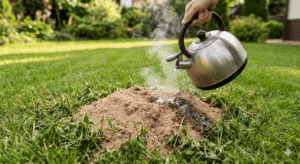
Effectiveness: Low
Pouring boiling water directly into ant hills kills ants on contact in the immediate area. However, it rarely reaches the queen deep in the colony, meaning the hill rebuilds within days.
It also scalds the surrounding grass, leaving dead patches in your lawn. For Nassau County homeowners with well-maintained turf, this trade-off isn’t worth it. Use this only as a temporary measure while arranging professional ant control.
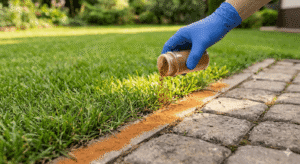
Method 2: Diatomaceous Earth
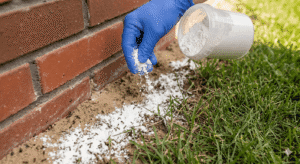
Effectiveness: Moderate
Food-grade diatomaceous earth (DE) is a natural powder made from fossilized algae. When ants walk through it, it damages their exoskeleton and dehydrates them. According to the National Pesticide Information Center, DE is effective for surface ant control but loses effectiveness when wet.
Application:
- Sprinkle around ant hills and along visible ant trails
- Reapply after rain
- Use gloves and a mask during application
Limitations: DE controls surface ants but doesn’t penetrate deep enough to eliminate colonies. It’s a short-term solution, not a permanent one.
Method 3: Ant Killer Granules & Baits
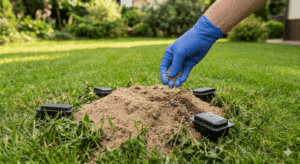
Effectiveness: Moderate to High (when used correctly)
Ant killer granules and bait stations are more effective than surface sprays because worker ants carry the bait back to the colony, where it eventually reaches and kills the queen.
The EPA’s guidance on ant baiting confirms that slow-acting bait formulations are among the most effective ant control methods because they allow ants to share the poison throughout the colony before dying.
Key Points:
- Use slow-acting bait (fast-killing baits don’t give ants time to share it)
- Place near ant trails, not directly on hills (this disrupts foraging)
- Keep bait dry and replace regularly
- Use species-specific formulations for best results
Limitation: Consumer-grade ant killer products are significantly less concentrated than professional formulations. They control small infestations but rarely eliminate established colonies in New York City lawns, where multiple interconnected colonies are common.
Method 4: Lawn Treatment Sprays
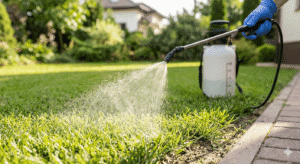
Effectiveness: Low to Moderate
Perimeter spray treatments create a chemical barrier around your lawn and foundation. They kill ants that cross the barrier, but don’t eliminate underground colonies.
Best Use:
- As a preventative measure in spring, before the ant season peaks
- Combined with baiting for more comprehensive control
- For creating a buffer between your lawn and home entry points
Limitation: In areas such as Manhattan and Brooklyn, with high ambient pressure, barrier sprays wear off quickly and require frequent reapplication.
Method 5: Natural Ant Deterrents
Effectiveness: Very Low
You’ve probably seen suggestions to use cinnamon, vinegar, lemon juice, or coffee grounds to get rid of ants. While these may temporarily disrupt ant trails, research doesn’t support them as effective long-term solutions.
A review in Pest Management Science found that while some plant-derived compounds exhibit insecticidal activity in laboratory settings, their effectiveness in real-world conditions is significantly reduced by environmental factors such as rain, wind, and UV exposure.
For minor ant activity, natural deterrents may reduce trail traffic. For established lawn infestations in Queens, Nassau County, or Melville, they’re not sufficient.
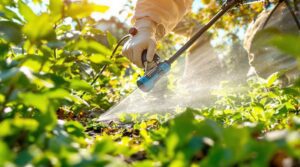
Method 6: Professional Ant Control: The Only Permanent Solution
Effectiveness: High
This is where DIY methods end, and real results begin. Professional ant control services, like those provided by Pestonix, use an Integrated Pest Management (IPM) approach that eliminates colonies at the source, not just on the surface.
The CDC endorses IPM as the safest and most effective pest management approach, combining biological, cultural, and chemical controls to achieve lasting results with minimal environmental impact.
What professional ant control includes:
What Pestonix Does to Control Ants in Your Lawn
When you call Pestonix, you’re not getting a technician who sprays the visible ant hills and leaves. You’re getting a licensed professional who follows a proven process to eliminate ants from your lawn completely.
Step 1: Professional Inspection
Our technicians conduct a thorough inspection of your lawn, garden beds, foundation perimeter, and any structures to:
- Identify the ant species present
- Locate all active colonies (not just visible mounds)
- Map ant trails and entry points into your home
- Assess conditions attracting ants to your property
Step 2: Colony Elimination, Not Just Surface Treatment
Surface treatments kill visible ants but leave the queen and colony intact. Pestonix uses professional-grade bait systems and direct colony treatments that:
- Reach the queen deep in the colony
- Eliminate the entire population, workers, eggs, larvae, and queen
- Treat interconnected satellite colonies common in NYC properties
- Use professional-strength formulations unavailable to consumers
Step 3: Perimeter Ant Control
We apply a professional perimeter treatment around your lawn and foundation to:
- Create a lasting barrier against reinfestation
- Prevent ants from transitioning from the lawn to the home
- Address entry points in foundations, doorways, and utility penetrations
This is particularly important for homes in Brooklyn, the Bronx, and Manhattan, where lawns are directly adjacent to building foundations and the risk of ant migration indoors is constant.
Step 4: Lawn Condition Improvements
We identify and recommend corrective actions for conditions attracting ants:
- Moisture issues (overwatering, drainage problems)
- Organic debris and mulch management
- Aphid infestations in garden beds
- Structural vulnerabilities allowing indoor access
Step 5: Follow-Up & Monitoring
Ant colonies can take several weeks to collapse after treatment fully. Pestonix schedules follow-up inspections to:
- Verify complete colony elimination
- Apply additional treatments if needed
- Prevent reinfestation from neighboring properties
How to Control Ants in Lawn: Prevention After Treatment
Once Pestonix eliminates your ant infestation, keep ants from returning with these professional prevention strategies:
Lawn Maintenance
- Mow regularly and keep grass at the recommended height for your species
- Dethatch annually to remove the organic matter ants use for nesting
- Aerate the soil to reduce the loose, compacted conditions that ants prefer
- Avoid overwatering, excess moisture attracts many ant species
Eliminate Food Sources
- Manage aphid populations in garden beds (aphids attract ants)
- Remove organic debris, fallen fruit, and compost from lawn areas
- Keep mulch layers thin and away from your foundation
- Clean up food and drink spills on patios and outdoor areas immediately
Physical Barriers
- Seal foundation cracks and gaps around utility penetrations
- Install physical barriers between garden beds and lawn areas
- Keep firewood and lumber stored away from your home’s foundation
Regular Monitoring
- Inspect your lawn monthly for new ant hill activity
- Check foundation perimeters after heavy rain (when ants relocate)
- Contact Pestonix at the first sign of new activity for a rapid response
When to Call a Professional for Lawn Ant Control
Many homeowners in Nassau County, Queens, and Melville try DIY methods for months before calling a professional, by which time the infestation is significantly worse and more expensive to treat.
Call Pestonix immediately if:
- You have multiple ant hills across your lawn
- Ant killer products haven’t reduced activity after 2 weeks
- You’re seeing ants inside your home as well as the lawn
- You’ve identified fire ants (dangerous for children and pets)
- You suspect carpenter ants near wooden structures
- Ant mounds are causing visible lawn damage
- You’ve had ant problems that return every season
Don’t wait until a manageable lawn problem becomes a home infestation. In dense urban environments like New York City, ant populations spread quickly between properties.
Ant Control Across Our NYC Service Areas
Pestonix provides professional lawn ant control throughout:
- Manhattan: Pre-war buildings and rooftop gardens with persistent ant pressure
- Brooklyn: Brownstone yards and garden-level apartments are frequently affected by pavement and carpenter ants
- Queens: Diverse residential properties from single-family homes to multi-unit buildings
- The Bronx: Older properties with established trees and wood infrastructure are vulnerable to carpenter ants
- Nassau County: Suburban lawns and garden communities where fire ants and odorous house ants are increasingly common
- Melville: Residential communities with landscaped properties requiring seasonal ant management
- New York City: Comprehensive ant control across all five boroughs with same-day response
Wherever you are in our service area, Pestonix’s licensed technicians understand the local pest pressure, soil conditions, and building types that influence ant activity. This local expertise is what makes the difference between temporary relief and permanent ant control.
Why Pestonix is the Right Choice for Ant Control in NYC
✓ Licensed & Insured Professionals All Pestonix technicians are NY State-licensed, EPA-certified, and fully insured. You’re protected from the moment we arrive.
✓ Integrated Pest Management Approach We don’t just spray and leave. Our IPM methodology targets the root cause of your ant infestation for results that last.
✓ Same-Day & Next-Day Service. Ant problems don’t wait, and neither should you. We offer rapid response appointments across Manhattan, Brooklyn, Queens, the Bronx, Nassau County, Melville, and all of New York City.
✓ Pet & Family-Safe Treatments Our professional formulations are safe for homes with children and pets when applied by our certified technicians.
✓ 100% Satisfaction Guarantee: If ants return within the guaranteed period, we’ll retreat your property at no charge. Your satisfaction is guaranteed.
✓ Transparent Pricing: Free inspections with upfront quotes. No hidden fees, no surprise charges, ever.
The Bottom Line: How to Control Ants in Lawn Areas for Good
Controlling ants in your lawn requires more than pouring boiling water on ant hills or scattering ant killer granules. Effective ant control means:
- Correctly identifying the ant species in your lawn
- Eliminating colonies at the source, not just surface ants
- Treating the whole property, including perimeters and foundations
- Removing attractants that bring ants back season after season
- Following up to catch reinfestation before it grows
DIY methods provide temporary relief at best. For homeowners and renters in Manhattan, Brooklyn, Queens, the Bronx, Nassau County, Melville, and New York City, the fastest and most cost-effective way to permanently eliminate ants from your lawn is professional treatment from Pestonix.
Don’t spend another summer dealing with ant hills. Call Pestonix today.