

Brownstones and prewar buildings have real charm, but they were built long before anyone worried about keeping mice and rats out. Shared walls, old masonry, cellars, and decades of added pipes and wiring give rodents plenty of ways in. The good news is that most of those routes can be found and closed with a methodical walkthrough and the right materials.
How Do You Rodent-Proof a Brownstone or Prewar Building?
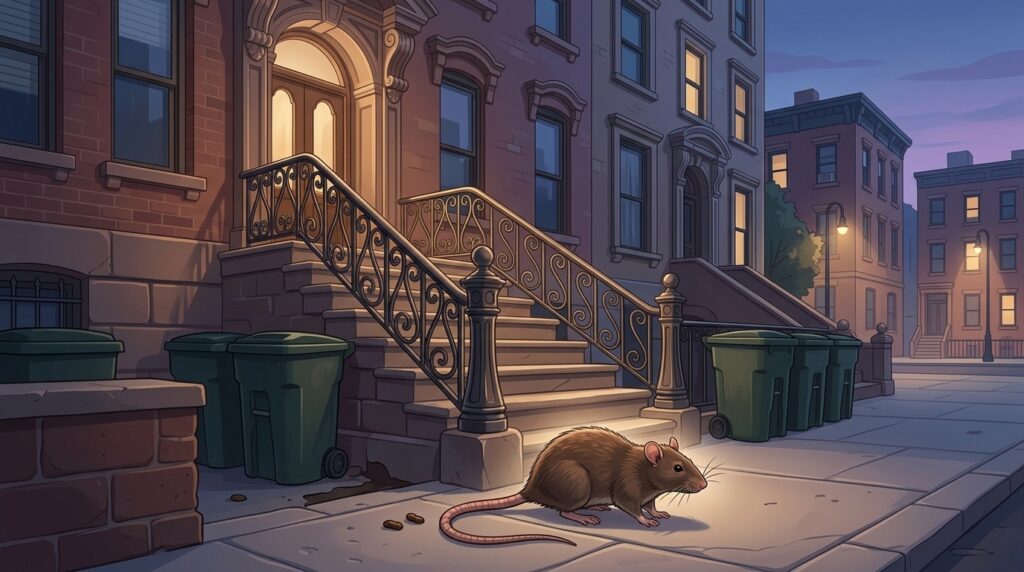
Find and seal every gap larger than about a quarter inch, starting in the cellar and around pipes and utility lines. Screen basement windows and vents with metal mesh, keep trash in the required lidded bin, remove food, water, and clutter, and inspect again every few months. Sealing works best alongside good sanitation, not instead of it.
Why Older NYC Buildings Are Harder to Rodent-Proof
Newer construction is usually tighter. Older row houses and prewar apartment buildings often have several features that work in a rodent’s favor:
- Party walls and connected wall voids, so a gap in one unit can lead somewhere else in the building
- Pipe chases and radiator pipe penetrations that were cut larger than the pipe and never fully closed
- Aging brick and mortar with cracks near the foundation
- Cellars, garden levels, areaways, and old openings at or below grade
- Spaces under stairs and behind built-ins that are rarely opened or inspected
The New York City Health Department’s pest-proofing guidance for building owners specifically calls out utility and plumbing openings, radiator pipe penetrations, and voids under staircases as places where pests can shelter and travel, which lines up with what older buildings tend to have.
Step 1: Inspect From the Cellar Up
Start at the lowest level and work upward, with a flashlight and a notepad. You are looking for gaps, gnaw marks, grease smudges along walls, and droppings. If you are unsure what you are seeing, our guide to telling rats and mice apart explains what each leaves behind, which matters because the two need different gap sizes and traps.
- Cellar or garden-level walls, floors, and the foundation line
- Areaways, old coal chutes, and any unused openings, if your building has them
- Every place a pipe, gas line, cable, or conduit passes through a wall or floor
- Radiator pipes, especially where they enter from the floor or wall
- Under stairs, behind kitchen and bathroom fixtures, and around appliances
- Exterior doors, basement windows, vents, and the roofline
Mice can squeeze through openings roughly the width of a pencil, about a quarter inch, so the rule of thumb is to seal anything at or near that size. Use the same rule for cracks in mortar near grade.
Step 2: Use the Right Sealing Material for Each Opening
Rodents gnaw, so caulk or foam alone will not hold. Pair a filler they cannot chew through with a sealant on top.
| Opening | What to Use |
| Small gaps around pipes and wires | Copper or steel mesh packed into the gap, then sealed over with a durable sealant |
| Pipe and radiator penetrations | Mesh filler plus a snug two-piece escutcheon plate, as the NYC Health Department suggests |
| Larger holes and vent openings | Hardware cloth, sheet metal, or masonry repair with mortar |
| Basement windows | Half-inch wire mesh over the opening, per the [[New York State Department of Health|https://www.health.ny.gov/environmental/pests/rats.htm]] |
| Gaps under exterior doors | Door sweeps that close the space, plus metal on door edges that have been gnawed |
Wear gloves when handling mesh and metal. Copper mesh lasts longer than steel wool because it does not rust.
Step 3: Get the Trash Right
Garbage is a food source that draws rats to a block, and NYC now regulates how small buildings set it out. Under the Sanitation Department’s residential containerization rules, properties with 1 to 9 residential units must use lidded bins of 55 gallons or less, and as of June 2026 that means the official NYC Bin. Most brownstones fall in this group. Enforcement with fines began in September 2026.
Beyond meeting the rule, keep bin lids latched, rinse food containers before they go out, and store bins away from the building when possible.
Step 4: Remove Food, Water, and Shelter
- Store pantry food in sealed containers, and do not leave pet food out overnight
- Fix dripping pipes and damp spots, especially in the cellar
- Swap cardboard storage in cellars and closets for plastic bins, and lift items off the floor
- Clear debris, stacked lumber, and overgrown areas in the backyard or garden
- Keep the space around the foundation clear so gaps and burrows are easy to spot
Own a Landmarked Brownstone? Check the Rules Before Sealing the Exterior
If your building is in a historic district, exterior work can involve the Landmarks Preservation Commission. According to the LPC, you do not need a permit for ordinary repairs or maintenance, such as caulking around windows and doors. Most other changes to front and rear facades do need review. Work like masonry repair, new vents, or anything that adds a wall penetration is worth confirming first. If you have any doubt, the LPC can be reached at 212-669-7817 before you start.
Interior sealing, such as pipe penetrations in the cellar, generally does not touch the facade, so it is often the easiest place to make progress.
Rodent-Proofing a Multi-Unit Prewar Building
In a shared building, one tenant sealing their own kitchen will not solve the problem if the wall voids connect to the next unit. Rodents move through chases, shafts, and shared basements, so the most effective approach is building-wide. Owners, co-op and condo boards, and supers should coordinate on the cellar, trash area, boiler room, and roofline, and residents should report droppings or noise early so the source can be traced.
Seal After You Confirm Rodents Are Out
Sequence matters. If rodents are already living inside your walls and you seal every exit, they can end up trapped and cause more damage indoors or die in inaccessible spaces. When there are signs of activity, deal with the active population first, then complete the exclusion work. A professional inspection can tell you which stage you are in.
When to Call a Professional
Call for help if you see droppings in several rooms, hear activity in walls or ceilings, find fresh gnaw marks, or cannot locate how rodents are getting in. In older buildings, the entry point is often behind a wall or under a floor where you cannot easily see it.
Pestonix provides rodent inspection and control across NYC, Long Island, and Melville. Our technicians can identify whether you have rats or mice, trace entry points, and build a plan that fits your building. Contact our team to schedule an inspection, or browse our pest library to learn more about the rodents and other pests we handle.