
If you live in New York or Long Island and you are asking yourself how to control ticks in my yard — you are not alone. Tick populations across the region have been surging for years, and 2025 has been one of the worst seasons on record.
According to the New York State Department of Health, New York averages over 17,500 new cases of Lyme disease every year, with over 19,000 cases reported in 2023 alone. Long Island has been specifically identified as a high-risk zone, with one infectious disease specialist at Stony Brook Southampton Hospital calling it “the capital of Lyme disease for the whole world.”
The good news is that there are proven, effective methods to dramatically reduce ticks in your yard — from basic landscaping and tick repellent strategies to professional-grade treatments from NYSDEC certified pest control in New York. This guide covers everything you need to know to protect your family, your pets, and your outdoor spaces.
| 🚨 Tick Alert: New York & Long Island 2025
Tick bites accounted for roughly 160 emergency department visits per 100,000 in the Northeast in July 2025 — nearly twice the rate of July 2024. Long Island is classified as a high-risk zone for infected blacklegged (deer) ticks by the NYS Department of Health. Cases of Lyme disease, babesiosis, and anaplasmosis are all trending upward across the region. |
Why Ticks in Your Yard Are a Serious Health Risk
Most people think tick bites only happen during hikes in the woods. The reality is that the majority of tick bites, and the diseases that follow, happen right in your own backyard.
The primary culprit in New York and Long Island is the blacklegged deer tick (Ixodes scapularis). This species can transmit:
- Lyme disease — the most common tick-borne illness in the state
- Babesiosis — a serious blood infection
- Anaplasmosis — with cases increasing year over year across New York
- Powassan virus — rare but potentially fatal; can be transmitted in as little as 15 minutes after a tick bite
- Rocky Mountain Spotted Fever — transmitted by the American dog tick
Immature nymphs — tiny, poppy-seed-sized ticks — are responsible for the vast majority of bites and disease transmission. They are most active from May through July, when people and children spend the most time outdoors. This is exactly why knowing how to control ticks in my yard before peak season is so important.
Where Do Ticks Live in Your Yard?
Before you can effectively control ticks, you need to know where they are hiding. Understanding tick behaviour is the foundation of any smart yard treatment strategy.
Ticks do not jump or fly. They practice something called questing — climbing to the tips of grass blades or low-lying brush and waiting for a passing host (a deer, a dog, a child) to brush against them.
| Tick Habitat | Risk Level | Notes |
| Woodland edges / tree lines | Very High | Where lawn meets woods — prime tick territory |
| Tall grass and weeds | High | Ticks climb to tips of blades to quest for hosts |
| Leaf litter and brush piles | High | Cool and damp — ideal resting conditions |
| Stone walls | High | Tick densities near stone walls are nearly triple other habitats |
| Shaded, moist garden beds | Medium-High | Blacklegged ticks cannot tolerate heat or dryness |
| Sunny, open lawn areas | Low | Heat and UV exposure kill ticks quickly |
| Outdoor furniture & play areas near tree lines | Medium | Risk increases if close to wooded areas |
How to Control Ticks in My Yard: Step-by-Step
Controlling ticks in your yard is not about a single product or a one-time treatment. The most effective approach combines habitat modification, tick repellent barriers, and targeted professional treatments. Here is a practical, step-by-step breakdown.
Step 1: Modify Your Yard’s Habitat
The first and most cost-effective step is making your yard less hospitable to ticks. These changes reduce the environments where ticks can survive and multiply:
- Mow your lawn regularly. Ticks prefer tall grass to climb and quest. Keeping your lawn short reduces this dramatically.
- Remove leaf litter. Piles of dead leaves create cool, damp hiding spots that ticks love. Rake and bag them regularly, especially in fall.
- Clear brush and overgrown vegetation. Trim shrubs and cut back any vegetation that extends into walkways, patios, or play areas.
- Stack firewood in dry, sunny areas. Damp woodpiles attract mice and other rodents that carry ticks.
- Move play equipment away from yard edges. Keep swing sets, sandbox areas, and patios in sunny, open spaces away from woodland borders.
- Remove old furniture and debris. Anything sitting in a damp, shaded area of the yard gives ticks a place to hide and survive.
Step 2: Create a Tick Barrier Around Your Property
One of the most effective tick control methods recommended by the CDC and tick experts is creating a physical barrier between your lawn and any adjacent woodland areas.
Place a 3-foot-wide strip of wood chips or gravel along the edge where your lawn meets the tree line or wooded areas. This serves two purposes:
- It creates a dry, hot surface that ticks cannot easily cross — blacklegged ticks dehydrate rapidly in dry, exposed conditions.
- It serves as a clear visual reminder for your family and guests to be aware as they approach the wooded border of your yard.
For the barrier, use broad, dry wood chips or bark — not the shredded, moist variety, which actually creates conditions ticks thrive in.
Step 3: Use Tick Tubes to Target the Source
Here is something most people do not realise: ticks do not arrive in your yard on their own — they ride in on animals, most commonly white-footed mice. Mice are the primary reservoir for Lyme disease bacteria, and when juvenile ticks feed on infected mice, they pick up the pathogen.
Tick tubes are biodegradable cardboard cylinders filled with permethrin-treated cotton. Mice collect the cotton to line their nests — and the permethrin kills any ticks feeding on those mice before they can develop and bite humans.
For effective results in a New York or Long Island yard:
- Place approximately 24 tubes per acre, spaced no more than 10 yards apart.
- Position them near stone walls, brush piles, and wooded edges — anywhere mice are likely to nest.
- Replace them twice a year — once in spring and once in summer.
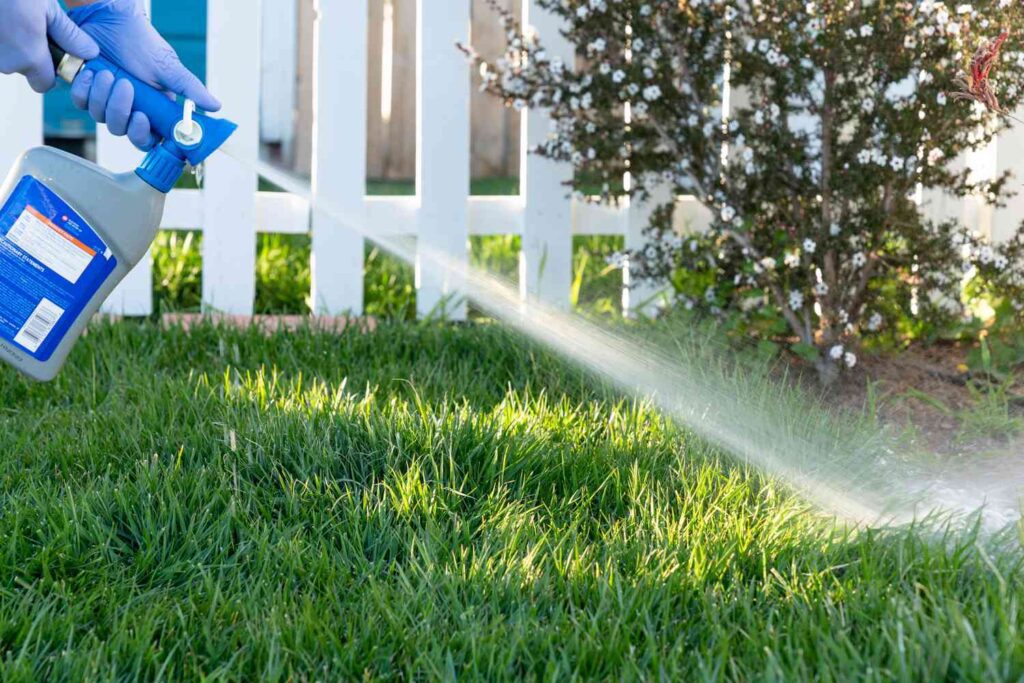
Step 4: Apply a Targeted Tick Repellent Yard Spray
When it comes to how to control ticks in my yard effectively and quickly, a properly applied tick repellent yard spray is one of the most powerful tools available. Research shows that targeted acaricide treatments can reduce nymph tick populations by nearly 94% when applied correctly.
The key is targeted spraying — not blanket coverage of your entire yard. Focus treatment on:
- The first few yards where your lawn meets any wooded or brushy areas
- Around stone walls and rock features
- Shaded garden beds and perennial borders
- Along pathways and trails near vegetation
Timing matters: Spray in mid-to-late May to target nymphs at peak activity, and again in September or October to suppress adult ticks before winter. Products containing bifenthrin or permethrin are among the most effective and widely used acaricides for residential tick control.
Step 5: Consider Deer Fencing
Adult blacklegged deer ticks are brought onto Long Island and New York properties primarily by white-tailed deer. If deer regularly enter your property, this represents a significant and ongoing source of tick introduction.
Research has shown that deer fencing can reduce nymphal tick populations by as much as 84% and virtually eliminate larval ticks within 70 yards of the fence line. For maximum effectiveness, install fencing at least 8 to 10 feet tall using solid or semi-solid materials that deer cannot easily push through or squeeze under.
Tick Repellent: Personal Protection While in the Yard
Even after treating your yard, personal tick repellent measures remain important — especially during peak tick season (May through July) in New York and Long Island.
The CDC recommends using EPA-registered repellents. The most effective options include:
- DEET (20–30%) — the gold standard for tick and mosquito repellent; highly effective against bites
- Picaridin — a good alternative with a less greasy feel
- IR3535 — effective and gentle on skin
- Permethrin spray for clothing — apply to clothes, shoes, and gear (not directly on skin); remains effective through several washes
After spending time outdoors, always perform a full body tick check — including behind knees, in the groin area, under arms, around the ears, and in the hairline. Check your children and pets too. Tumble dry clothing on high heat for at least 10 minutes to kill any ticks that may be on fabric.
What to Do After a Tick Bite
Even with the best tick control in your yard, bites can still happen. Knowing how to respond quickly can make all the difference in preventing Lyme disease and other tick-borne illnesses.
- Remove the tick properly. Use fine-tipped tweezers to grasp the tick as close to the skin as possible. Pull upward with steady pressure. Never squeeze the body or use petroleum jelly, nail polish, or heat.
- Note how long it was attached. Lyme disease transmission typically requires a tick to be attached for 36 hours or more. Powassan virus, however, can be transmitted in as little as 15 minutes.
- Watch for symptoms. Seek medical care immediately if you develop a bulls-eye rash, fever, flu-like symptoms, fatigue, or joint pain within 30 days of a suspected bite.
- See a doctor promptly if the tick was engorged. If a deer tick was attached for 36+ hours, contact your healthcare provider within 72 hours — preventive treatment may be recommended.
Tick Control Calendar for New York & Long Island
| Season | Tick Activity | Recommended Action |
| Early Spring (March–April) | Adults active as temperatures rise above freezing | Check yard edges; prepare for treatment season |
| Late Spring (May–June) | Nymphs peak — highest risk of bites and disease | Apply first acaricide spray; place tick tubes; mow regularly |
| Summer (July–August) | Continued nymph and early adult activity | Second tick tube placement; personal repellent daily |
| Fall (September–October) | Adult ticks resurge on deer | Apply second acaricide spray; clear leaf litter; inspect yard |
| Winter (Nov–Feb) | Most activity reduced, but not eliminated | Plan for next season; deer fencing installation |
When to Call a NYSDEC Certified Pest Control Expert
DIY methods are a solid starting point, but if you are dealing with a significant tick infestation, a large wooded property, or you want the most reliable protection for your family, professional treatment is the way to go.
Hiring a NYSDEC certified pest control in New York professional offers several important advantages:
- Licensed and regulated. NYSDEC (New York State Department of Environmental Conservation) certified applicators are trained and legally authorised to apply professional-grade acaricides that are not available to the general public.
- Targeted expertise. A certified professional knows exactly where ticks concentrate on your specific property — and will not waste product by spraying areas that do not need treatment.
- Correct timing and application. Professionals apply treatments at the right times of year (mid-May, mid-June, and October) with high-pressure equipment that ensures full coverage of tick habitat zones.
- Integrated Pest Management (IPM). The best certified professionals use IPM strategies — combining habitat modification, targeted chemical treatment, and ongoing monitoring to reduce tick populations while minimising environmental impact.
- Peace of mind. If your children or pets use your yard regularly, professional treatment means you can be confident the job has been done properly.
At Pestonix, we provide professional mosquito and tick control services specifically designed for New York and Long Island properties. Our treatments are carried out by trained experts using proven, safe methods that deliver long-lasting results. To learn more about our service, visit our mosquito and tick control.
| 🌿 Protect Your Yard with Pestonix
Serving New York and Long Island homeowners with certified, professional tick and mosquito control. Our NYSDEC compliant treatments target ticks where they live — giving you a safer yard for your family and pets all season long. Learn more → |
Frequently Asked Questions: How to Control Ticks in My Yard
How often should I spray my yard for ticks?
For most properties in New York and Long Island, two applications per year provide effective control — one in mid-to-late May targeting nymphs, and one in September or October targeting adult ticks. Properties with heavy deer pressure may benefit from a third application in summer.
Are tick yard sprays safe for children and pets?
Professional acaricides — including bifenthrin and permethrin-based products — are considered safe once dry. A NYSDEC certified pest control professional will advise you on re-entry times and any precautions needed for children and pets. Typically, you should keep people and animals off treated areas for 30 to 60 minutes after application, or until the product is dry.
What is the most effective tick repellent for my yard?
Targeted sprays using bifenthrin or permethrin, combined with tick tubes and habitat modification, represent the most effective overall approach. Research shows that targeted acaricide treatment can reduce tick populations by up to 94% when applied correctly.
How do I know if I have a tick infestation in my yard?
You can perform a simple tick drag test: tie a square of white flannel fabric to a stick and drag it slowly along the grass near your yard’s woodland edges. Check the fabric for ticks every few feet. If you find ticks consistently, your yard needs treatment.
Can I control ticks in my yard naturally?
Habitat modification — mowing regularly, removing leaf litter, clearing brush, and placing tick tubes — provides meaningful natural tick reduction without pesticides. Planting tick-repelling herbs like lemon thyme, lemon balm, and garlic near seating areas can also deter ticks naturally. However, for properties with heavy infestations or wooded borders, professional treatment offers the most reliable results.
Do ticks stay active in winter in New York?
Adult blacklegged deer ticks remain active in New York whenever temperatures are above freezing — which means tick season in New York is essentially year-round. Nymph activity drops significantly in winter, but adult ticks can bite on warm days in January and February. This is why fall treatment before winter is still important.
Conclusion
Figuring out how to control ticks in my yard is one of the most important things you can do as a homeowner in New York and Long Island. With tick populations rising, Lyme disease cases climbing year after year, and warm seasons starting earlier, the risk of tick bites in your own backyard has never been higher.
The good news is that a combination of smart yard management, tick barriers, tick tubes, targeted tick repellent sprays, and support from a NYSDEC certified pest control in New York professional gives you every tool you need to dramatically reduce tick populations and protect the people you care about.
Don’t wait for a bite to take action. Start with the habitat modifications outlined in this guide, and when you are ready for professional backup, Pestonix is here for homeowners across New York and Long Island. Visit our mosquito and tick control to learn more or get in touch with our team today.