

No. Rodenticides are not safe around pets and young children unless the bait is locked inside a tamper-resistant station and placed where neither can reach it. Even then, a pet can be poisoned by eating a rodent that fed on the bait.
Rat and mouse poison is designed to attract and kill mammals. The bait is flavored to be eaten, and children and dogs are the most common accidental victims.
If you have rats or mice and also a dog, cat or toddler at home, this guide explains which products carry the most risk, what actually makes a bait station safer, which warning signs to watch for, and what to do in an emergency. If your child or pet may have already eaten rat poison, skip to the emergency steps.
Why Rat Poison Is Risky for Pets and Children
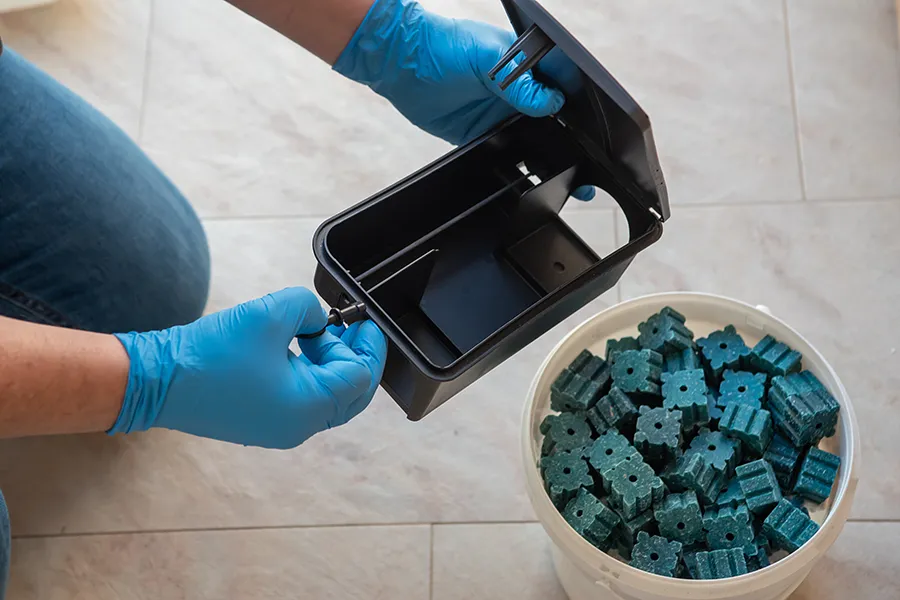
Rodent baits often contain ingredients such as peanut butter, molasses and grains. The National Pesticide Information Center notes that these also appeal to children and pets, and that a single dose can cause serious health effects in people, pets and wildlife.
Young children are the most exposed group. Poison control data from 2011 recorded 12,886 rodenticide exposures in the US, and nearly 80% involved children aged five or younger. The numbers are older, but the pattern is consistent across EPA and poison center reports. Among animals, EPA has reported that dogs account for most non-target exposures to household rodenticides.
Not All Rodenticides Work the Same Way
EPA groups rodenticide active ingredients into three categories: first-generation anticoagulants, second-generation anticoagulants and non-anticoagulants. The differences matter, because the symptoms, timing and treatment are not the same.
| Type | Common active ingredients | How it works | What to know for pets and kids |
|---|---|---|---|
| First-generation anticoagulants | warfarin, chlorophacinone, diphacinone | Stops blood from clotting | Bleeding signs can take days to appear. Vitamin K1 is the standard antidote. |
| Second-generation anticoagulants | brodifacoum, bromadiolone, difenacoum, difethialone | Same effect, more potent and longer lasting | EPA calls them especially hazardous. Not allowed in consumer products. |
| Bromethalin | bromethalin | Attacks the nervous system and causes brain swelling | No specific antidote. Cats are more sensitive than dogs. |
| Cholecalciferol | vitamin D3 | Raises calcium and phosphorus, damaging kidneys and heart | Narrow margin of safety, so small amounts can be serious. |
| Phosphides | zinc phosphide | Releases phosphine gas in the stomach | Fast and severe. More common in mole and gopher bait. |
Two practical points follow from this table:
- Many brands sell anticoagulant and bromethalin baits under the same name, so read the active ingredient on the label, not the brand.
- Appearance cannot tell you the type, because different baits look alike. The ASPCA advises keeping the original packaging so a vet can identify what was eaten.
First-Generation vs Second-Generation Anticoagulants
Second-generation anticoagulants were developed to control rodents resistant to the older products. EPA says they are highly toxic and stay in body tissue for a long time. Rodents can feed several times before they die, so a poisoned carcass can carry residues far above a lethal dose.
Since the 2008 EPA decision, products sold to homeowners cannot contain brodifacoum, bromadiolone, difenacoum or difethialone, and packages are limited to one pound. Licensed professionals can still use those baits in homes. That is why, when you hire someone, the active ingredient, the station type and the placement all matter.
Are Bait Stations Safe?
A tamper-resistant bait station is much safer than loose bait, but it is not risk-free.
EPA requires consumer rodenticides to come with bait stations and to use block or paste bait, because loose pellets are easier for children to reach. Product labels also require tamper-resistant stations wherever children under six, pets or non-target wildlife have access to the bait.
What to look for:
- Tamper resistance rating. EPA recognizes tiers. The highest tier resists children and dogs and also holds up outdoors. Lower tiers are for indoor use only.
- A locked or latched lid. Cheap boxes without a secure latch are a weak point.
- Anchoring. University of Nebraska extension guidance says stations should be fixed to the floor, a heavy stone or a wall so bait cannot be shaken out.
- Placement away from reach. The AVMA advises placing any rodent poison in areas completely inaccessible to pets.
Stations contain the bait. They do not stop a pet from eating a poisoned rodent, which is the next risk.
The Hidden Risk: Poisoned Rodents
EPA warns that pets and wildlife can be poisoned by eating rodents that have consumed bait. Cats that hunt mice are especially exposed to this route, which veterinary toxicologists call relay toxicosis.
Poisoned rodents can also die inside walls or other spots you cannot reach, so you may not find them. Where you can, EPA advises removing dead rodents promptly so no pet or wild animal eats them.
Safe Placement and Storage Checklist
If bait is used in or near your home, follow these EPA-based rules:
- Read the label and follow every direction.
- Place baits and traps only where children and pets cannot reach them.
- Store unused product in a locked cabinet or shed, never next to food or pet food.
- Keep products in the original container with the label intact.
- Check stations regularly and remove dead rodents promptly.
- Ask your landlord or building manager what is being used in shared areas of the building, since you may not control bait in basements or hallways.
Warning Signs in Pets and Children
In pets, signs depend on the type of poison and can be delayed:
- Anticoagulants: bruising, blood in urine or stool, lameness, weakness. Signs often take about three to five days to appear.
- Bromethalin: wobbliness, tremors, seizures, hind-leg weakness. Signs may be delayed by days at lower doses.
- Cholecalciferol: increased thirst and urination, lethargy, loss of appetite, vomiting.
- Zinc phosphide: vomiting, bloating, rapid breathing, collapse. Signs can start quickly.
In children, do not wait for symptoms. The NYC Poison Center says to call right away if someone has been exposed to a poison, even if they seem fine.
What to Do If Your Pet or Child Is Exposed
- Remove the child or pet from the area and take away any remaining bait. If a child has bait in their mouth, clear it out.
- For a child, call Poison Control at 1-800-222-1222 or the NYC Poison Center at 212-764-7667. Do not try to make the child vomit. Call 911 if the child is unresponsive, has trouble breathing or is having seizures.
- For a pet, go to your vet or an emergency animal clinic right away, or call ASPCA Poison Control at (888) 426-4435. Do not wait for symptoms, because anticoagulant poisons can take days to show.
- Bring the packaging or note the active ingredient, the product name and when it happened.
- Do not use home remedies unless a poison control specialist or vet tells you to.
What the Rules Say in the US and New York
- Federal: EPA’s rules limit what homeowners can buy and require tamper-resistant stations where children, pets or wildlife can reach bait.
- New York City: NYC Health says rat bait used in its programs is placed in tamper-resistant stations. Its guidance for pest professionals calls for secured stations and DEC-certified applicators, and warns that poorly trained application has killed pets and wildlife.
- Possible changes: New York lawmakers have introduced bills that would restrict anticoagulant rodenticides, so the rules may change.
Safer Rodent Control When You Have Pets or Kids
Poison is only one tool, and often not the first one to reach for. A safer plan usually puts these first:
- Exclusion. Sealing gaps, pipe openings and vents stops rodents from getting in. Our pest proofing and exclusion service focuses on this.
- Sanitation. Seal food in hard containers, secure trash and clean pet bowls before dark.
- Traps placed out of reach. The New York State Department of Health says traps are generally less hazardous to children and pets than poison, but they still need to be placed where they cannot be handled.
- An IPM approach. Integrated Pest Management uses inspection, prevention and targeted treatment, with bait as a measured last step.
Not sure what you are dealing with? See how to tell rats from mice or our guide to getting rid of mice in NYC apartments.
Questions to Ask Before You Hire a Pest Control Company
- Are your applicators certified by the New York State DEC?
- Which active ingredients do you use, and why?
- Will bait go in locked, tamper-resistant stations? Where exactly will they be placed?
- How will you protect my pets and children, and what do I need to keep out of reach?
- How often will you check stations and remove dead rodents?
- What is your plan to seal entry points so I do not need bait long term?
- Is there a written guarantee?
If your landlord is responsible for rodent control in your building, our guide on landlord vs tenant pest control in NYC explains who does what.
How Pestonix Handles Rodent Baiting
Our rodent and wildlife management service starts with an inspection of the inside and outside of the property to find activity, nesting areas and entry points. We combine exclusion sealing with Integrated Pest Management, and when baiting is part of the plan we use tamper-resistant bait stations with monitoring. Our rodent service avoids open poison placement in accessible areas.
Pestonix lists NYSDEC commercial certified pesticide applicator credentials on its website. We serve all five boroughs, Long Island and Westchester, with same-day and 24/7 service. The rodent service includes a 3-Month No-Pest Guarantee, and inspections come with an upfront quote.
If you have pets or children and need rodent control, you can book a free inspection or call 917-913-6062 (NYC) or 631-560-2166 (Long Island). Tell us about your household first so the plan fits it.
Rodenticide safety information here is general guidance and not medical or veterinary advice. In an emergency, contact poison control, your vet or 911.
FAQ
Is rat poison safe if I have a dog or cat?
No. Rat poison can sicken or kill dogs and cats, and no consumer rodenticide should be called pet-safe. Risk drops when bait is in locked, tamper-resistant stations out of reach, but pets can still be poisoned by eating a poisoned rodent.
Are bait stations safe for kids and pets?
They are safer than loose bait. EPA requires tamper-resistant stations where children, pets or wildlife can reach bait, but they must be locked, anchored and placed out of reach. Stations do not prevent secondary poisoning.
Which rat poison is safest for pets?
None is safe. The types differ in treatment: anticoagulants have an antidote (vitamin K1), while bromethalin has no specific antidote. Choosing a type is not a substitute for exclusion, traps and careful placement.
How long after eating rat poison will a pet show symptoms?
It depends on the poison. Anticoagulant signs often take around three to five days. Other types can cause signs within hours or after several days. Call a vet right away instead of waiting.
Can my pet be poisoned by eating a dead mouse or rat?
Yes. EPA warns that pets and wildlife can be poisoned by eating rodents that consumed bait. Cats that hunt are at particular risk.
Is my landlord responsible for rodent control in my NYC apartment?
Generally yes. Landlords are responsible for keeping buildings free of pest infestations. See our landlord vs tenant guide for details.