
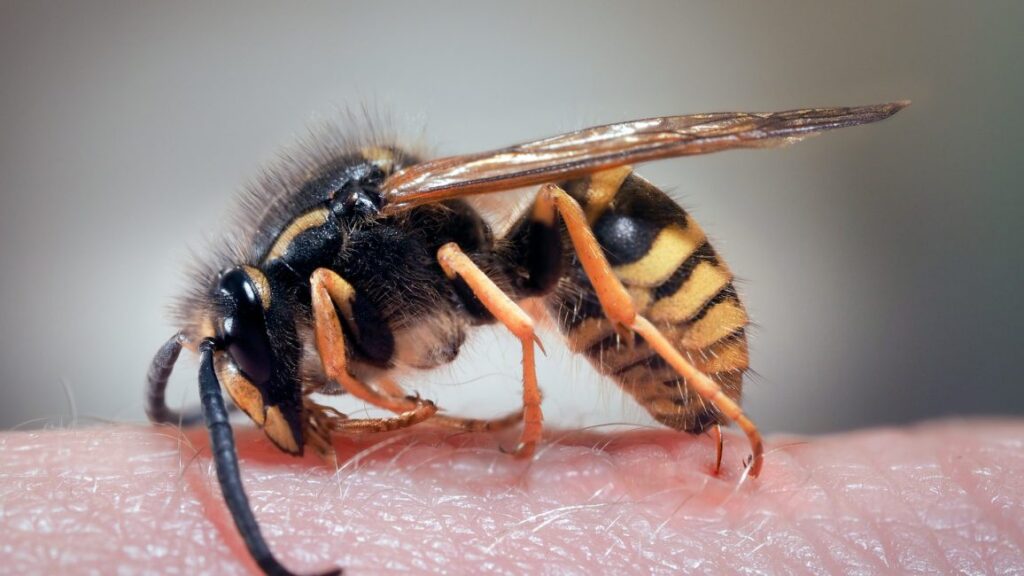
Bees, wasps, hornets, and yellow jackets sting rather than bite, but the question is the same: what do I do now? For most people, a sting is painful and annoying, and basic first aid is enough. The harder part is telling a normal sting from a reaction that needs emergency care, and knowing what to do about the nest that caused it.
This guide covers wasp sting treatment step by step, what a normal reaction looks like over time, the warning signs of a severe allergic reaction, and when the real fix is a call to a pest professional.
This article is general information, not medical advice. If you think someone is having a severe allergic reaction, call 911 first and read the rest later.
What Should I Do After a Wasp or Bee Sting?
Move away from the insects, then remove any stinger right away by scraping or plucking it out. Wash the area with soap and water and apply a cold compress for 10 to 20 minutes. Call 911 immediately for trouble breathing, swelling of the face or throat, dizziness, or hives spreading beyond the sting.
- Get away from the insects. Walk calmly and quickly away from the spot. Stings release an alarm pheromone that attracts other wasps, so staying put invites more stings.
- Remove the stinger, if there is one. Only honey bees leave their stinger behind. Wasps, hornets, and yellowjackets usually do not, and they can sting more than once. Scrape the stinger out with a fingernail or the edge of a card, or pluck it out if that is faster. Speed matters more than technique.
- Wash with soap and water. This cleans the skin, lowers the risk of infection, and removes lingering pheromone.
- Apply a cold compress. Use a cloth dampened with cold water or wrapped ice for 10 to 20 minutes, then take a break and repeat if needed. Do not put ice directly on the skin.
- Raise the area if you can. If the sting is on an arm or leg, elevate it to reduce swelling. Take off rings or tight items before swelling starts.
- Treat the symptoms. Mayo Clinic suggests an over-the-counter pain reliever, an oral antihistamine for itching and swelling, and calamine lotion or 0.5% to 1% hydrocortisone cream on the skin. Follow the label, and ask a pharmacist or doctor first for children, during pregnancy, or if you take other medicines.
- Stay with the person and watch closely. Severe allergic reactions typically begin within 5 to 30 minutes, so the first half hour matters most.
The advice on removing stingers varies slightly. Most medical sources say to scrape, and the NYC Health Department specifically says not to squeeze or pull. Penn State Extension notes that limited evidence suggests prompt removal matters more than the method. In short, do not waste time. Get it out fast.
Skip folk remedies. Cold, clean, and symptom relief are what the evidence supports.
Normal Reaction, Large Reaction, or Allergic Reaction?
Not every swollen sting is an allergy. Allergists describe three main patterns, and a fourth that comes from many stings at once. The American Academy of Allergy, Asthma and Immunology practice parameter and Mayo Clinic are the basis for the table below.
| Reaction | What it looks like | Typical timeline | What to do |
| Normal local reaction | Sharp, burning pain, redness, a welt, and mild swelling at the sting site | Usually fades over a few hours to a few days. Mayo Clinic says mild symptoms can last up to seven days. | First aid at home |
| Large local reaction | Swelling that spreads well beyond the sting, often more than 3 inches. A sting on the forearm can swell the whole arm. | Swelling starts to grow around 6 to 12 hours, increases over 24 to 48 hours, peaks at 48 to 72 hours, and settles over 3 to 10 days. | Cold, elevation, antihistamines. See a doctor if it is very painful, very large, or not improving. |
| Severe allergic reaction (anaphylaxis) | Symptoms beyond the sting site, such as hives, swelling of the face or throat, trouble breathing, dizziness, or vomiting | Typically starts within 5 to 30 minutes | Emergency. Use prescribed epinephrine if available and call 911. |
| Toxic reaction from many stings | Nausea, vomiting, diarrhea, fever, and lightheadedness after a dozen or more stings | Develops as venom builds up | Seek urgent medical care. Call 911 for children, older adults, or anyone with heart or breathing problems. |
A large local reaction looks alarming but is usually not life-threatening, and the chance of a later severe reaction is low, though an allergist can advise if you have had one.
Typical sting reaction timeline
| Time after the sting | What is typical |
| Seconds to minutes | Sharp pain, burning, redness, and a welt. A honey bee stinger can deliver all of its venom within seconds, which is why fast removal matters. |
| 5 to 30 minutes | The window when severe allergic reactions typically begin, according to the Canadian Paediatric Society’s review of stinging insect allergy. |
| A few hours to a few days | Pain, redness, and swelling from a normal reaction fade. |
| 6 to 12 hours | In a large local reaction, swelling often starts to increase. |
| 24 to 72 hours | Large local swelling peaks and can feel tight, itchy, and painful. |
| 3 to 10 days | Large local reactions subside. |
| Hours after emergency treatment | Severe reactions can return after they seem to resolve. Medical teams often observe patients for several hours. |
Timelines vary from person to person, and these ranges come from allergist and medical sources, such as the AAAAI practice parameter and the Canadian Paediatric Society, not from NYC-specific data.
When Is a Sting an Emergency? Anaphylaxis Symptom Checklist
Anaphylaxis is a severe, whole-body allergic reaction. University of Kentucky Extension reports that about two million Americans are hypersensitive to stinging insect venom, and that allergic reactions to these stings send roughly 225,000 people to U.S. emergency rooms each year. Mayo Clinic advises calling 911 for a sting reaction that suggests anaphylaxis even if only one or two of the following symptoms are present.
Call 911 for any of these after a sting:
- Trouble breathing, wheezing, or tightness in the chest
- Swelling of the lips, face, eyelids, tongue, or throat, or trouble swallowing
- Hives or itching spreading over the body, away from the sting site
- Dizziness, fainting, or loss of consciousness
- A weak and rapid pulse
- Nausea, vomiting, or diarrhea
Also treat it as urgent if:
- The person has been stung many times, especially a child, an older adult, or someone with heart or breathing problems
- A sting is near the eyes, nose, mouth, or throat and swelling is blocking vision or breathing
- The person has had a severe reaction to a sting before
While you wait for help
- If the person has a prescribed epinephrine auto-injector, use it at the first sign of a severe reaction, then call 911, or have someone call at the same time. Do not wait to see if symptoms pass. Cleveland Clinic says it goes in the outer thigh, and can go through clothing if necessary.
- Epinephrine is the treatment for anaphylaxis. Antihistamines can ease itching and hives, but they do not replace it.
- Follow the prescriber’s instructions and the device’s directions. Many people are prescribed two devices because a second dose may be needed if symptoms do not improve within about 5 to 15 minutes.
- Have the person lie down with their legs raised, or sit up if breathing is difficult. Do not let them stand.
- Go to the emergency room even if they feel better. Reactions can return after epinephrine wears off.
Poison Control can answer sting questions at any time, free and confidential. Call the national Poison Help line at 1-800-222-1222, or the NYC Poison Control Center at 212-POISONS (212-764-7667), available 24 hours a day. Poison Control is for advice. In an emergency, call 911.
When to See a Doctor After a Sting
You do not always need 911, but some situations call for a medical visit:
- Swelling that keeps spreading, is very painful, or covers a large area
- Symptoms that are not improving after a few days
- Signs of infection, such as increasing redness, warmth, pus, or fever. Infection after a sting is uncommon, but it can happen.
- A dozen or more stings, even if the person feels fine at first
- Any past allergic reaction to a sting, even a mild one
If you have ever had a systemic allergic reaction, see an allergist. Mayo Clinic notes that people with a severe reaction have on average about a 50 percent chance of anaphylaxis the next time they are stung. The American College of Allergy, Asthma and Immunology says venom immunotherapy, or allergy shots, can provide up to 98 percent protection against future reactions. A doctor decides who needs an epinephrine auto-injector. A large local reaction alone usually does not call for one.
Which Insect Stung You?
Knowing what stung you helps, both for first aid and for deciding what to do about the source. Honey bees sting once and leave the stinger. Wasps, hornets, and yellowjackets can sting repeatedly. If you cannot tell, our guide to wasps, hornets, and yellowjackets explains how to identify them by body shape and nest. Female carpenter bees can also sting, though they rarely do. Our page on carpenter bee control covers those.
One more clue is location. According to Penn State Extension, wasps and yellowjackets foraging away from the nest rarely sting unless they are trapped or crushed against skin. If you were stung more than once, or stung in the same spot near your home, there is probably a nest close by.
Stung Near Home? Why the Nest Matters
First aid fixes the sting. It does not fix the reason you were stung. A nest near a door, walkway, balcony, or play area is likely to be disturbed again, and the same colony can sting other people. For someone with a known allergy, a nearby nest is a serious risk.
In NYC, calling the city will not get a nest removed. According to NYC311, property owners are required to remove most wasps and bees from their own property. Our guide on what to do if you find a bee or wasp nest covers how far to stay back, what not to do, and when removal makes sense.
How to Avoid Stings
- Do not swat at wasps. Stay calm and move away slowly.
- Keep food and drinks covered outdoors, and check cans and cups before sipping. Wasps and yellowjackets are drawn to sweet drinks, meat, and trash in late summer.
- Keep trash lids tight, and clean up food spills quickly.
- Wear shoes on grass, especially near flowering weeds.
- Do not mow or trim near a suspected nest. Vibrations can trigger a defensive attack.
- In spring, check eaves, railings, and sheds for small, early nests. They are easiest to deal with while they are small. Our NYC seasonal pest guide shows when stinging insects are most active.
- If you have been prescribed epinephrine, carry it and check the expiration date.
When to Call a Pest Professional
Call for help if any of these apply:
- You or someone in the household was stung near your home and you cannot find or identify the source
- The nest is underground, inside a wall, in an attic, or otherwise hidden
- It is near an entrance, walkway, balcony, or play area
- It is large, high up, or would require a ladder
- Anyone in the household has a sting allergy
If you are dealing with wasps or yellowjackets, Pestonix can help. Our yellow jacket control service starts by locating the nest, whether it is aerial, in a wall void, or underground, and treating the colony at its source. Treatments are family-safe and pet-safe, and they are backed by our 3-Month No-Pest Guarantee. Licensed technicians serve NYC, Long Island, and Westchester, with quick response to urgent problems.
Contact our team to schedule an inspection, especially if someone in your home has a known sting allergy.
Frequently Asked Questions
What is the best wasp sting treatment at home?
Move away, remove any stinger, wash with soap and water, apply a cold compress for 10 to 20 minutes, and elevate the area if you can. An oral antihistamine, a pain reliever, and hydrocortisone cream or calamine lotion can ease itching and discomfort.
How long does a wasp sting last?
A normal sting usually fades over a few hours to a few days, and Mayo Clinic says mild symptoms can last up to seven days. A large local reaction can take longer, with swelling peaking at 48 to 72 hours and settling over 3 to 10 days.
Should I use ice or heat on a sting?
Use cold. A cold compress for 10 to 20 minutes helps reduce pain and swelling. Wrap ice in a cloth rather than placing it directly on the skin.
Do wasps leave a stinger in the skin?
Usually not. Honey bees leave their stinger and die. Wasps, hornets, and yellowjackets generally keep their stinger and can sting multiple times.
How do I know if I am allergic to bee or wasp stings?
You often do not know until a reaction happens. Allergy can develop after earlier stings that caused only mild symptoms. Any whole-body symptom, such as hives away from the sting, trouble breathing, swelling of the face or throat, dizziness, or vomiting, is a reason to call 911 and later see an allergist.
Is a swollen arm after a sting an allergic reaction?
Not necessarily. A swollen arm from a forearm sting is a typical large local reaction, which is uncomfortable but usually not dangerous. A severe reaction involves symptoms away from the sting site, such as hives, trouble breathing, or dizziness.
Should I take an antihistamine after a sting?
An oral antihistamine can help with itching and swelling from a mild or moderate reaction, according to Mayo Clinic. It does not treat anaphylaxis. If there are signs of a severe reaction, call 911 and use epinephrine if it has been prescribed.
When should I call 911 for a sting?
Call 911 for trouble breathing, swelling of the lips, face, or throat, hives spreading across the body, dizziness or fainting, a weak and rapid pulse, or vomiting after a sting, even if only one or two of these symptoms appear. Also call for many stings in a child, older adult, or anyone with heart or breathing problems.